Will the Sails Go Up on a Lisbon Sail? Wind, Motor and What Is Promised
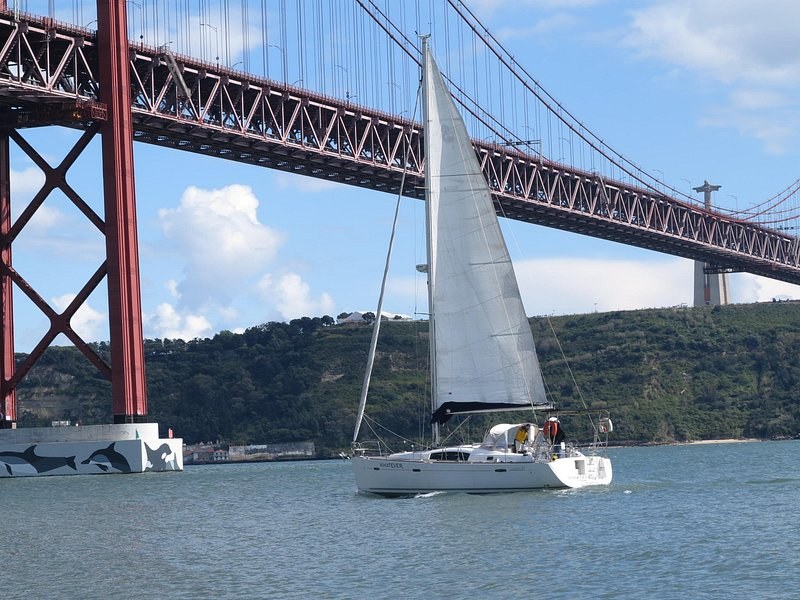
The short answer. On a sailboat, the sails go up when the wind allows, and no boat on the river promises you'll be under sail the whole way. Only one boat promises to hoist the sails at the start, a couple more let guests help sail, and the catamaran, the open-bar yacht and the traditional boat are sold as cruises. The Lisbon sunset and wine sailing tours use the same sailboats, with the wine poured as you go.
What each kind of boat promises
| Kind of boat | What the fare says about sailing | Fare a person |
|---|---|---|
| Sailboat that hoists | The crew hoist the sails at the start | $34 |
| Sailboat with the helm | Guests may steer and help | $28 to $38 |
| Sailboat or sailing yacht | Sold as a sailing boat, no set sailing time | $34 to $69 |
| Catamaran, yacht or traditional boat | Sold as a cruise | $31 to $56 |
The difference matters because "sailing tour" covers all four. A sailboat sold without a promise is still a sailboat: on a good evening its crew will raise the sails. A cruise boat may never do so, and nothing in its fare says it should.
Why a sailboat motors
A sailing boat on a schedule has two jobs: to show you the city and to be back at the dock on time. When the wind falls away, the only way to do both is the engine. On a flat, still evening you may motor most of the way, and the crew will still reach Belém Tower and the old city on time.
Too much wind is the other reason. The crew of the ten-guest wine sail from Santo Amaro kept the sails down for part of one September evening because the wind was very high, and the traveller who wrote about it still gave the evening five stars. A skipper who keeps a heeling boat under control with ten guests and their wine glasses on deck is doing the job, not skimping on it.
The afternoon wind
Lisbon's summer wind has a name. The nortada is the north and north-west wind that dominates the Portuguese west coast in summer, and a University of Lisbon study in the journal Finisterra notes that it often reaches high speeds in the afternoon. For a sail it is mostly good news: the reliable breeze is why the sails go up on so many summer evenings. On the windiest days it is the reason a crew reefs or furls.
The boats that promise to sail
If raising the sails is the point, look for a boat that says so in the fare.
- The day-or-sunset sail from Alcântara: the crew hoist the sails at the start, then follow the bank towards the city before turning downriver past the monuments.
- The wine sail with snacks from Alcântara: guests may grab the helm and help with the manoeuvres, or simply sit back.
- The one-hour sail from the Bom Sucesso marina: you may help the crew sail the boat, no experience needed, and the crew set the route by the tide and the wind.
Even these depend on the day. A promise to hoist is a promise to try; the wind still decides how long the sails stay up.
The boats sold as cruises
The 90-minute sunset catamaran is sold as a relaxed cruise with music and a bar, and nothing in its fare promises sail time. The open-bar yacht from Santo Amaro and the traditional river boat from the downtown station are sold the same way. On the traditional boat, one traveller found the sail photographed on the listing furled and the boat under engine. The other big boats are on Lisbon sunset cruises.
That is not a reason to avoid them. A cruise boat is steadier, carries more people and usually has a bar. It is the wrong choice only if sailing was the reason you booked.
How to pick a boat that sails when it can
- Choose a sailboat, not a cruise. The kind of boat is on every card.
- Look for a hoist or the helm. Those are the only fares that mention sailing itself.
- Pick a small group. Ten guests leave room to work the sails.
- Go in summer or early autumn. The steadier breeze gives the sails their best chance.
- Ask at the dock. A skipper will tell you honestly what the wind is doing.
For the months with the steadiest breezes and the mildest evenings, see the best time for a Lisbon sunset sail, and for what you pass whatever the wind, Lisbon from the river.
Doing both: a sail by day, a cruise at sunset
If you have more than one evening in Lisbon, you do not have to choose. The breeze tends to build through a summer afternoon, so a daytime sail gives the sails their best chance, while a sunset cruise gives you the light, a bar and a steadier deck. Book the sail first, on your earliest free afternoon, so a still day leaves you time to try again.
| Afternoon sail | Sunset cruise | |
|---|---|---|
| Best for | Seeing the sails up | The light and a drink |
| Wind | Usually building | Varies by evening |
| Deck | Heels in a breeze | Steady |
| Length | About two hours | 90 minutes to two hours |
Together the pair costs roughly what one premium sunset sail does on its own, and you see the river twice, in two different lights.
Verdict by visitor type
If you want to sail, book a boat that hoists or hands you the helm. If you want the city and the light and do not mind an engine, any sailboat will do, and the two-drink sunset sail on a sailing yacht adds a second drink and a host. If you want company and a bar, book a cruise and enjoy it for what it is. Before you book, read how to book a Lisbon sail; for the traveller reports on calm and gusty evenings, see Lisbon sailing tour reviews. The answers to the other common questions are on the Lisbon sailing FAQs.
Boats that sail when the wind allows
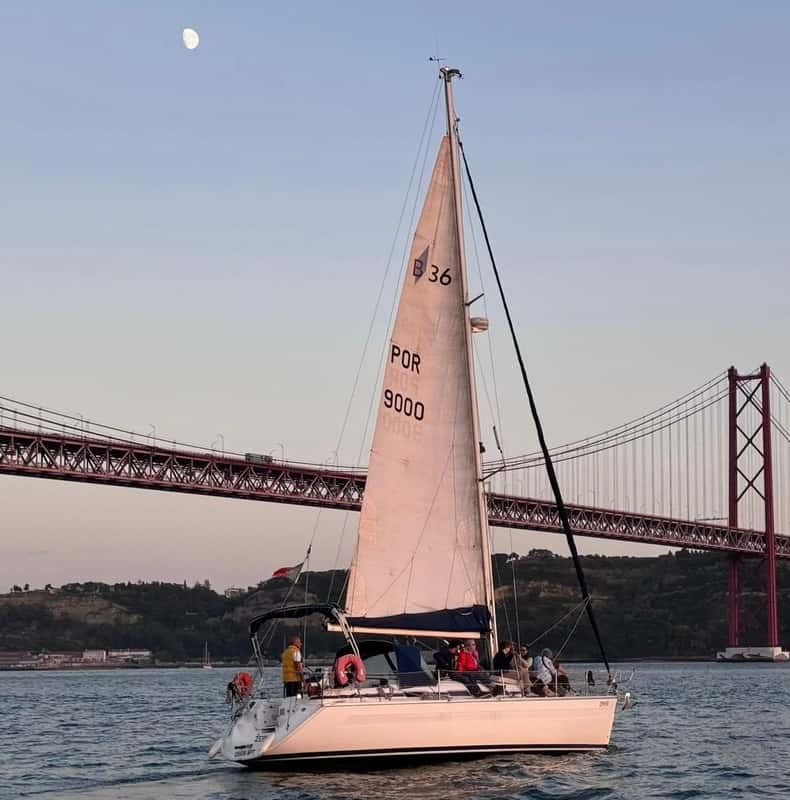
Lisbon: Day and Sunset Tour on the Tagus River
Two hours on a ten-guest sailboat from Alcântara in the morning, the afternoon or at sunset. The crew hoist the sails at the start when the wind allows; blankets and a toilet on board.
From $34 per person
Check Availability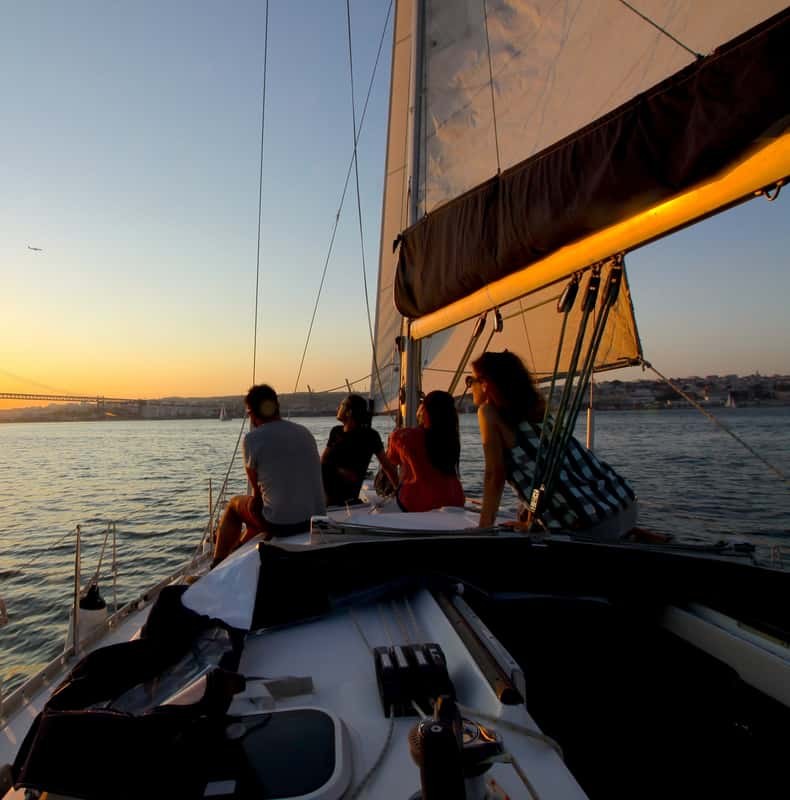
Lisbon: Sailing Tour with Wine and Snacks
Two hours on a ten-guest sailboat from Alcântara with white wine, beer and snacks. Guests may take the helm and help with the sails when the wind allows.
From $38 per person
Check Availability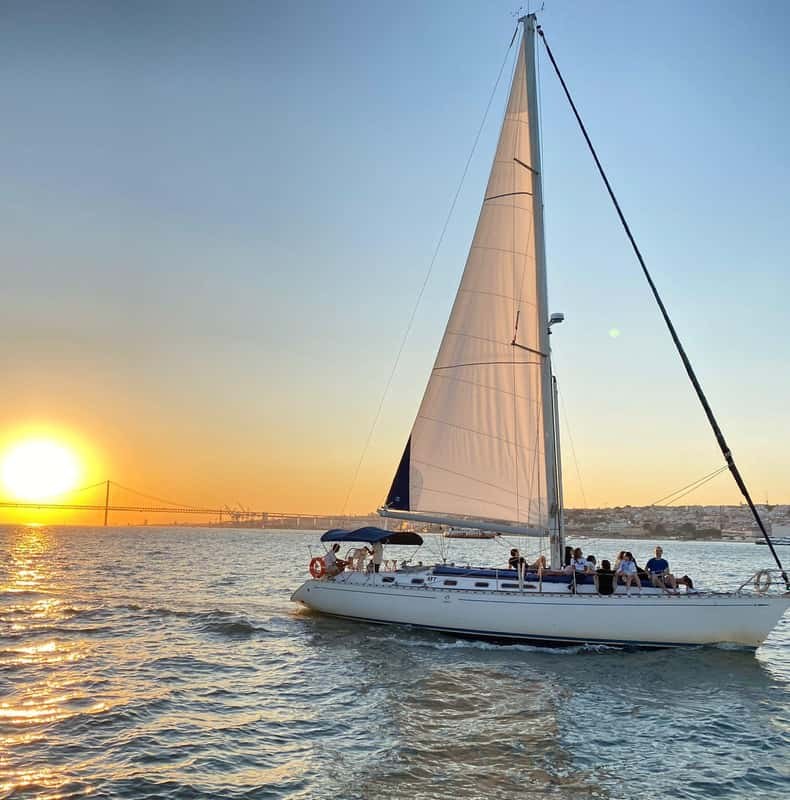
Lisbon: Sailing Tour on the Tagus River
An hour on a sailboat from the Bom Sucesso marina, with a drink and a light snack. The crew let you help sail the boat when the wind allows, with no experience needed.
From $28 per person
Check AvailabilityNext: Choose a boat that hoists or hands you the helm, then pick your date. Every fare sits side by side on Lisbon Sailing Tours.